|
 |
 |
 |
 |
 |
 |
 |
|
What are the principles of the software licensing audit?
Software licensing audit is checking the correspondence between the software inventory subject to copyrights installed on every workstation in the company and the information on the proofs of purchase and licenses.
In SoftwareCheck, software inventory is checked by a scanner, which very precisely collects information on files, their properties, installed products and software suites. For example, in the SoftwareCheck Professional version, the scanner “browses” through all files on the particular workstation, retrieves the information on applications from the registers, communicates with installation managers and files and – if it is needed – reads configuration and information files. The result of the scanner operation is a scan – a set of coded and zipped files that are loaded to the database by SoftwareCheck.
Loaded to the database, the scans are subject to further processing, automatically or under control of the Auditor. All these steps are aimed at obtaining a clear and unambiguous list of applications and products installed on each and every workstation.
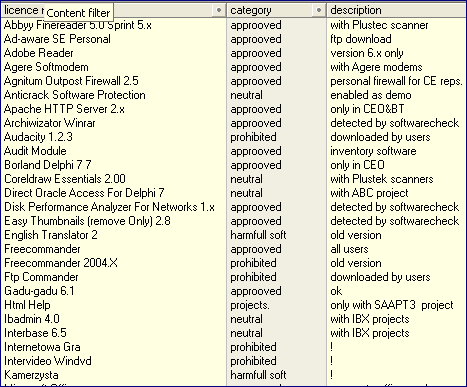
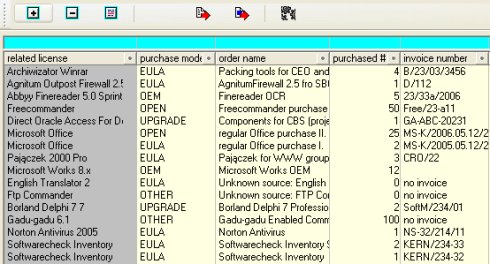 (i.e. detected files and installed software applications) with the "virtual" context
(i.e. copyrights and diverse proofs of purchase and licenses). (i.e. detected files and installed software applications) with the "virtual" context
(i.e. copyrights and diverse proofs of purchase and licenses).
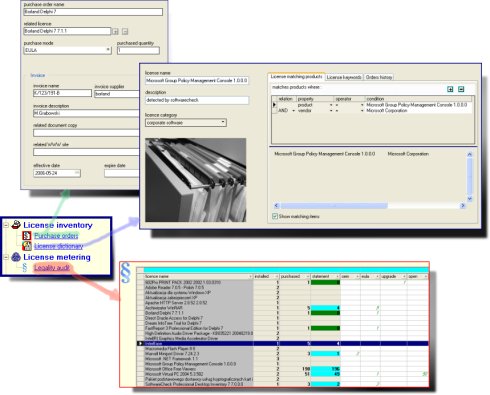
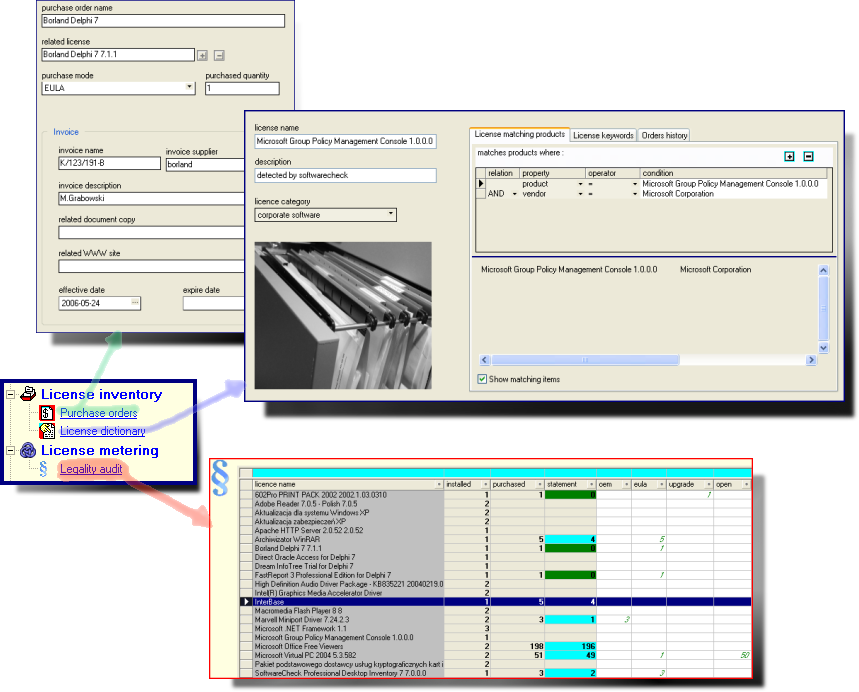
- Purchase orders -purchased licenses: quantity, type, description
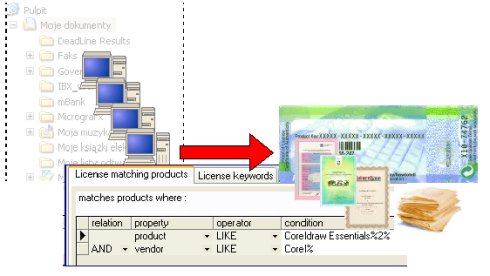
- License dictionary - licenses in the company - name, description, classification, rules of association with the installed applications
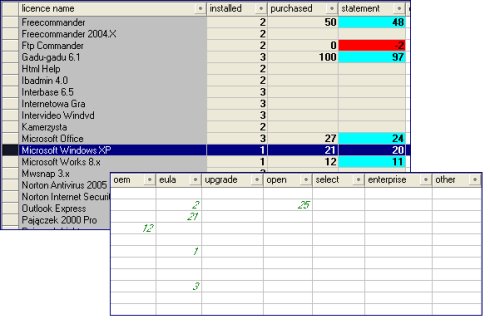
- Legality audit -automatically generated report comparing the quantities of purchased applications and the installed applications
Software licensing audit in SoftwareCheck involves entering the information about software applications and their proofs of purchase and licenses to a database and creation or automatic generation of rules according to which those two different kinds of information are related to each other.
|
|
|
 |
|
|
|
|
|
|
|
|
|
 |
|
|
|
Send your question:
|
|






 other questions ...